BRRR vs flip: which strategy suits your first deal?
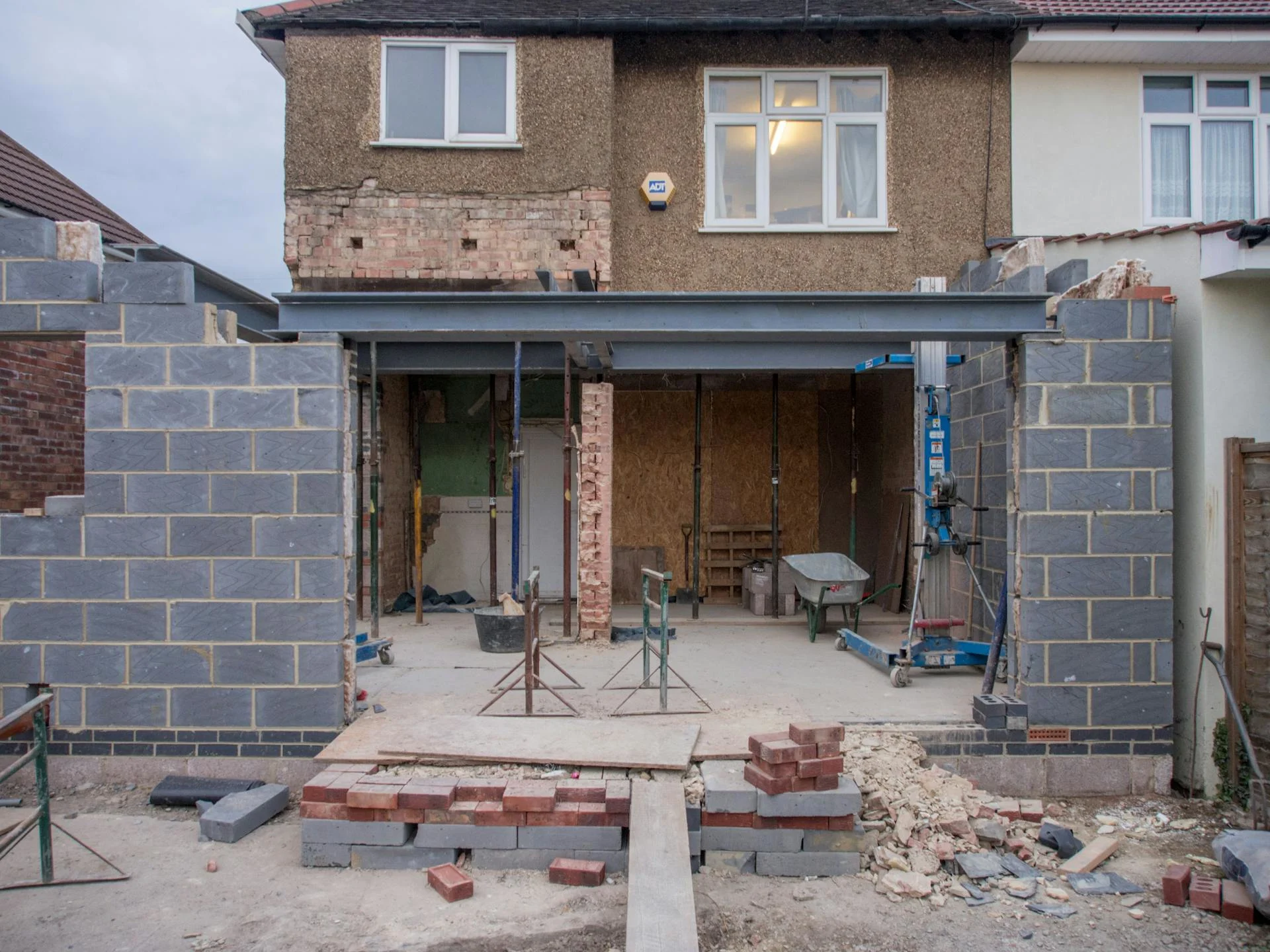
Two strategies. Same starting point. Very different outcomes.
Both start with buying a property that needs work. Both require you to estimate your refurbishment costs accurately before you commit. But flipping gives you a lump sum and gets you out of the deal quickly, while BRRR keeps you in the deal long term with a rental income stream and a growing portfolio.
If you are working on your first deal, this is the decision that shapes everything that follows.
How flipping works (and what it actually costs)
Flipping is straightforward in concept. You buy a property below market value, refurbish it, and sell it for a profit. The margin between your total costs and the sale price is your profit.
But the total costs are more than just the purchase price plus refurb. You need to account for:
Purchase costs including stamp duty (with the additional property surcharge if this is not your only property), legal fees, and any survey costs.
Refurbishment costs covering every trade from strip out to decoration. Getting this number wrong is the single biggest reason flips fail. A refurb cost estimate based on real trade rates is the difference between a profitable flip and an expensive lesson.
Holding costs while you own the property. If you are using bridging finance, that means monthly interest at 0.5 to 1 percent, plus insurance, council tax, and utilities. Every month you hold the property, your profit shrinks.
Selling costs including estate agent fees (typically 1 to 1.5 percent plus VAT) and legal fees for the sale. And do not forget the tax. If you are flipping, HMRC may treat the profit as trading income, not capital gains. That means income tax rates of up to 45 percent, not the lower capital gains tax rates. This catches a lot of first time flippers off guard.
How BRRR works (and when the numbers stack)
BRRR stands for Buy, Refurbish, Refinance, Rent. The goal is not to sell the property but to keep it, refinance it at the higher post refurbishment value, and pull your original capital back out so you can use it again on the next deal.
The sequence: you buy a property (often with bridging finance or cash), refurbish it to increase its value, get it revalued, take out a standard buy to let mortgage at 75 percent of the new value, and use the mortgage funds to repay your bridging loan. If you have bought well and added enough value, the refinance covers everything you put in, leaving you with a tenanted property, a monthly rental income, and your capital returned for the next purchase.
Where BRRR differs from flipping is the exit. You do not sell, so there are no estate agent fees, no selling legal costs, and no immediate tax event. The profit sits as equity in the property and as monthly cash flow from the tenant.
But BRRR only works if the numbers align. The post refurbishment value needs to be high enough that a 75 percent mortgage covers your purchase price and refurb costs. If there is a shortfall, you leave cash in the deal, which limits your ability to repeat the process.
Side by side comparison with real UK figures
Here is a simplified example using a typical 3 bed terraced house outside London.
Purchase price: £110,000. Refurb costs: £25,000. Total invested: £135,000.
Flip scenario. Post refurb sale price: £175,000. After stamp duty (£6,800 at second property rates), buying legal fees (£1,500), selling agent fees (£2,625 plus VAT), selling legal fees (£1,200), and 6 months of bridging interest (approximately £5,400 at 0.8 percent per month on the full facility), your total costs are approximately £152,525. Gross profit: £22,475. Before income tax.
BRRR scenario. Post refurb valuation: £175,000. New BTL mortgage at 75 percent: £131,250. That covers most of your £135,000 outlay, leaving £3,750 in the deal. Monthly rent: £850. Monthly mortgage payment (interest only at 5 percent): £547. Monthly cash flow before costs: £303. And you still own the asset.
The flip gives you a one off profit. The BRRR gives you a long term income stream and a property that may appreciate further over time. The question is which outcome you need right now.
Which strategy if you have limited capital?
If you have one pot of capital and need to recycle it quickly, BRRR is theoretically better because the refinance returns your money for the next deal. But it only works if the numbers allow a clean refinance. If the post refurb valuation does not support a 75 percent mortgage that covers your costs, you are stuck with capital locked in a property you cannot release.
Flipping is more predictable in terms of capital recycling. You sell, you get your money back (minus costs and tax), and you move on. The trade off is that tax and selling costs eat a significant chunk of the profit, meaning you need bigger margins on each deal.
For a first deal, many developers start with a flip because it is easier to model and the exit is cleaner. They move to BRRR once they understand the refurb process and have built relationships with reliable contractors.
Which strategy if you want long term income?
BRRR wins here. Building a portfolio of refinanced, tenanted properties creates a compounding income stream. Each deal adds another property and another rental income, and because you have recycled your capital, the portfolio grows faster than if you were saving a new deposit each time.
The catch is that portfolio lending becomes more complex after three or four properties. Lenders apply stricter stress tests, and your ability to refinance depends on your overall portfolio performance. This is a longer conversation, but it is worth understanding before you commit to a pure BRRR strategy.
How refurb costs change your decision
In both strategies, the accuracy of your refurb cost estimate is the single most important variable. Underestimate by 20 percent on a flip and your profit disappears. Underestimate by 20 percent on a BRRR and you leave more cash in the deal than planned, breaking the recycling model.
This is where cost per square metre estimates fall short. A blanket rate of £1,500 per square metre tells you nothing about whether the property needs a full rewire, a new kitchen, or just decoration. The only reliable approach is a room by room, trade by trade breakdown using current labour and material rates.
Before committing to either strategy, run the numbers properly. Use the BRRR calculator or the flip calculator to model the full deal, including refurb costs, finance, and exit. The 10 minutes it takes to do this properly can save you months of regret.
Get your first refurb estimate free
Try Refurb Calculator free for 7 days